
Rebuilding Los Angeles: The Q2 House and the Return of the Arch
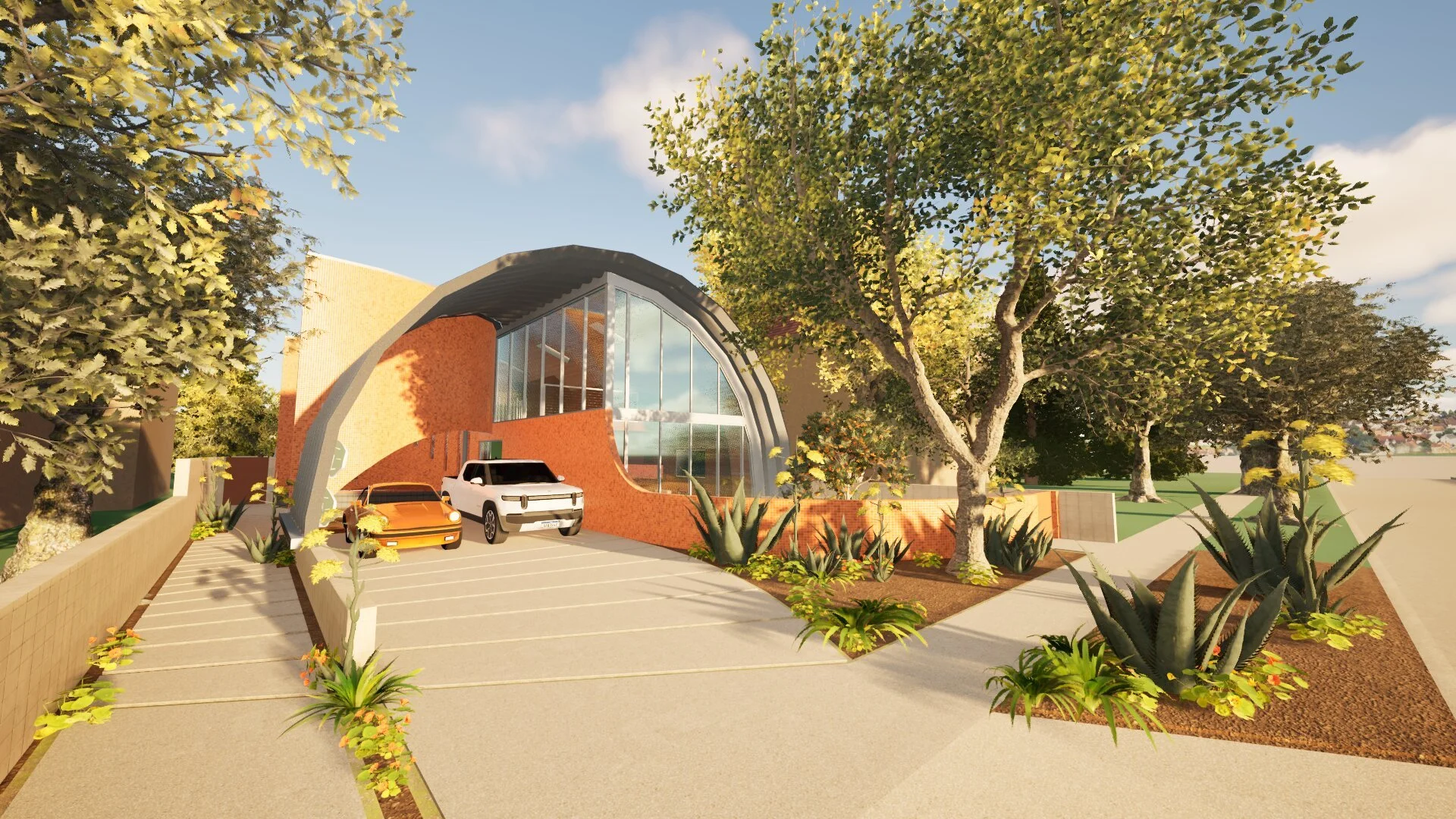
Q2 Street View Rendering: the gracefully arching Quonset structure shelters the double-height main living space and a carport
In the face of increasing environmental pressures and the urgent need for resilient housing in Southern California, the Q2 (“Quonset 2-Story”) House emerges as both a prototype and a provocation—a rethinking of how we build, inhabit, and protect the domestic environment. Developed as part of Case Study 2.0 program on rebuilding Los Angeles, this project revisits a familiar yet under-explored architectural form: the Quonset arch.
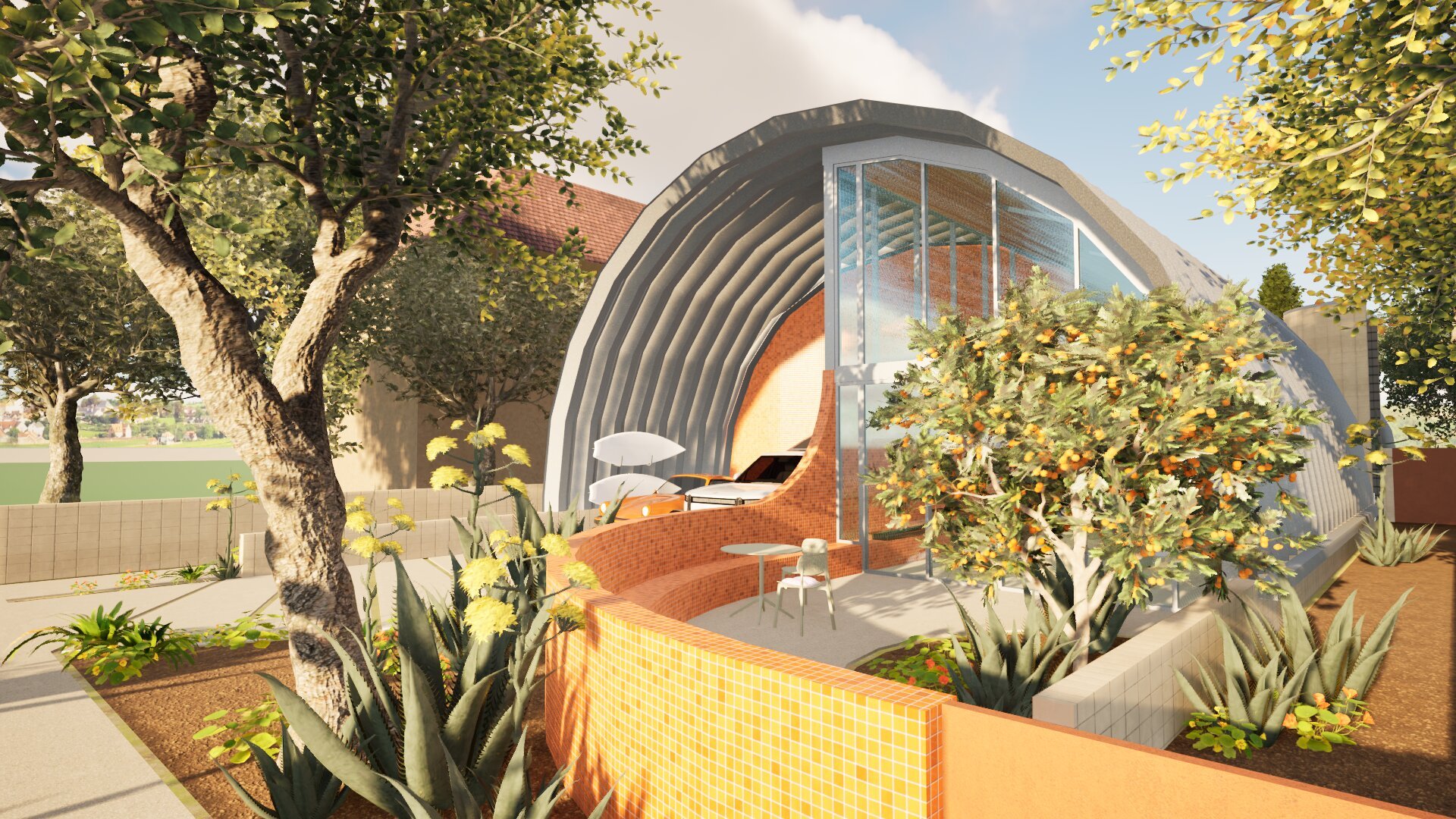
Q2 Sidewalk Approach Rendering: the main living space extends out to the front walled garden, engaging with the neighborhood
At its core, the design embraces the inherent efficiency and clarity of the arch—a structural gesture that is at once ancient and modern. The prefabricated galvanized steel shell spans a generous 38 by 84 feet, creating a free-flowing, double-height volume that dissolves conventional boundaries between structure, enclosure, and space. This single, continuous form serves as roof, wall, and identity, reducing complexity while amplifying spatial experience.
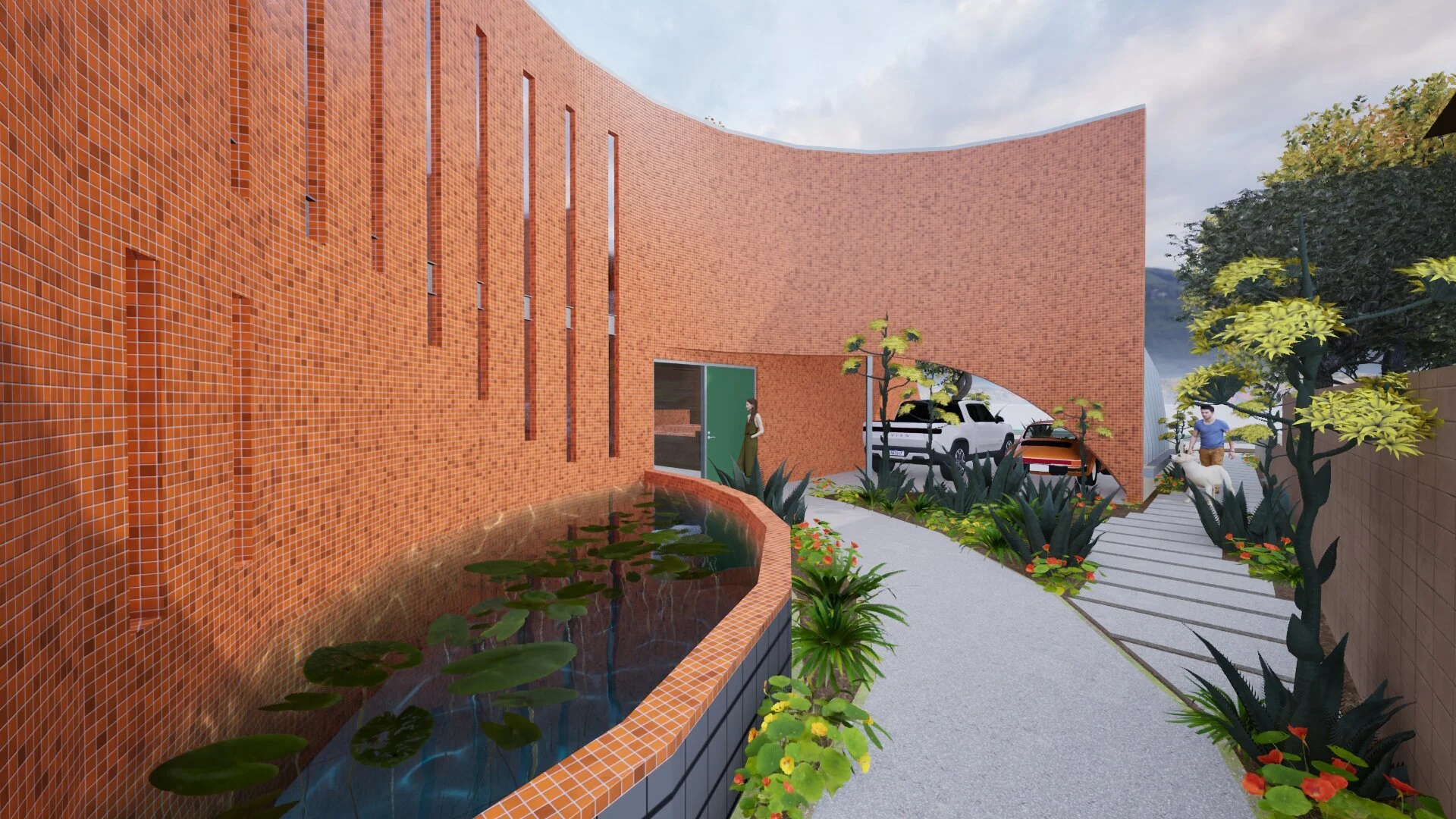
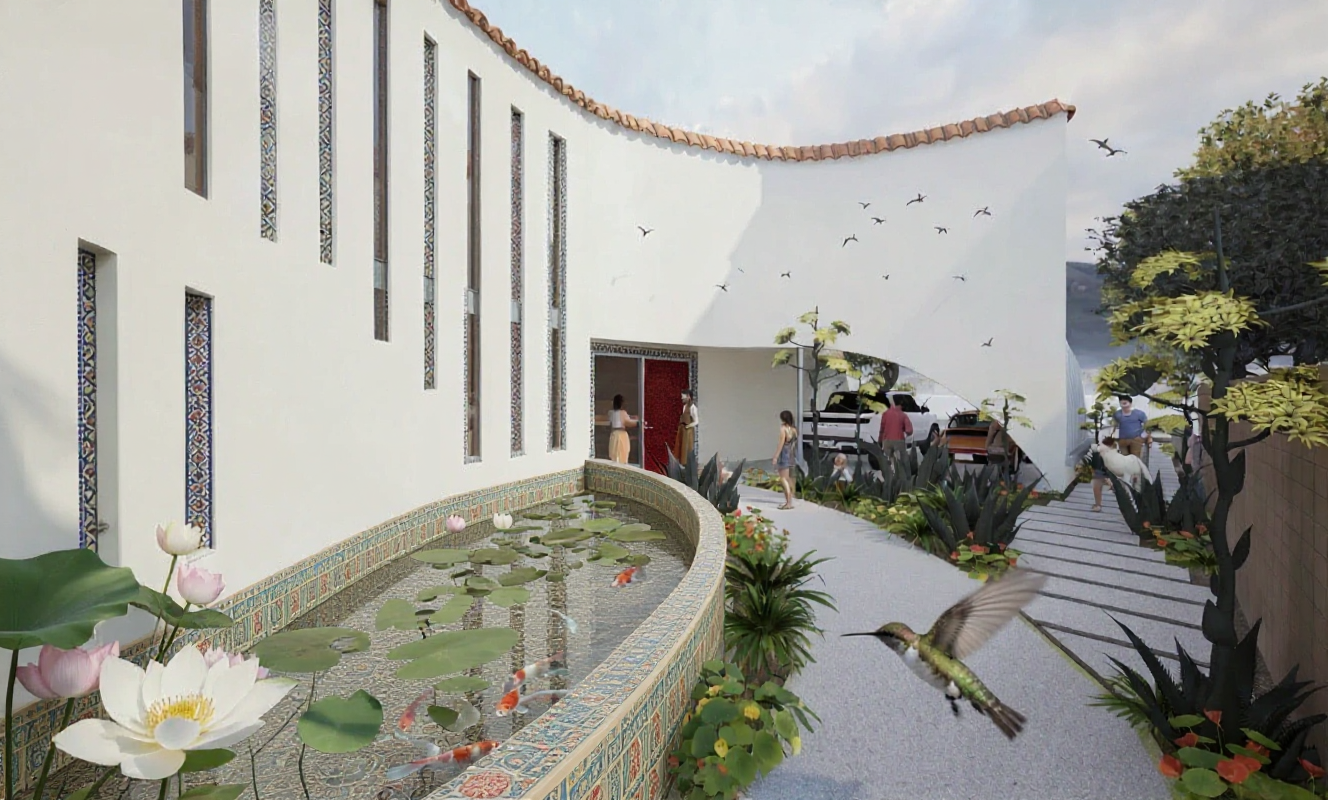
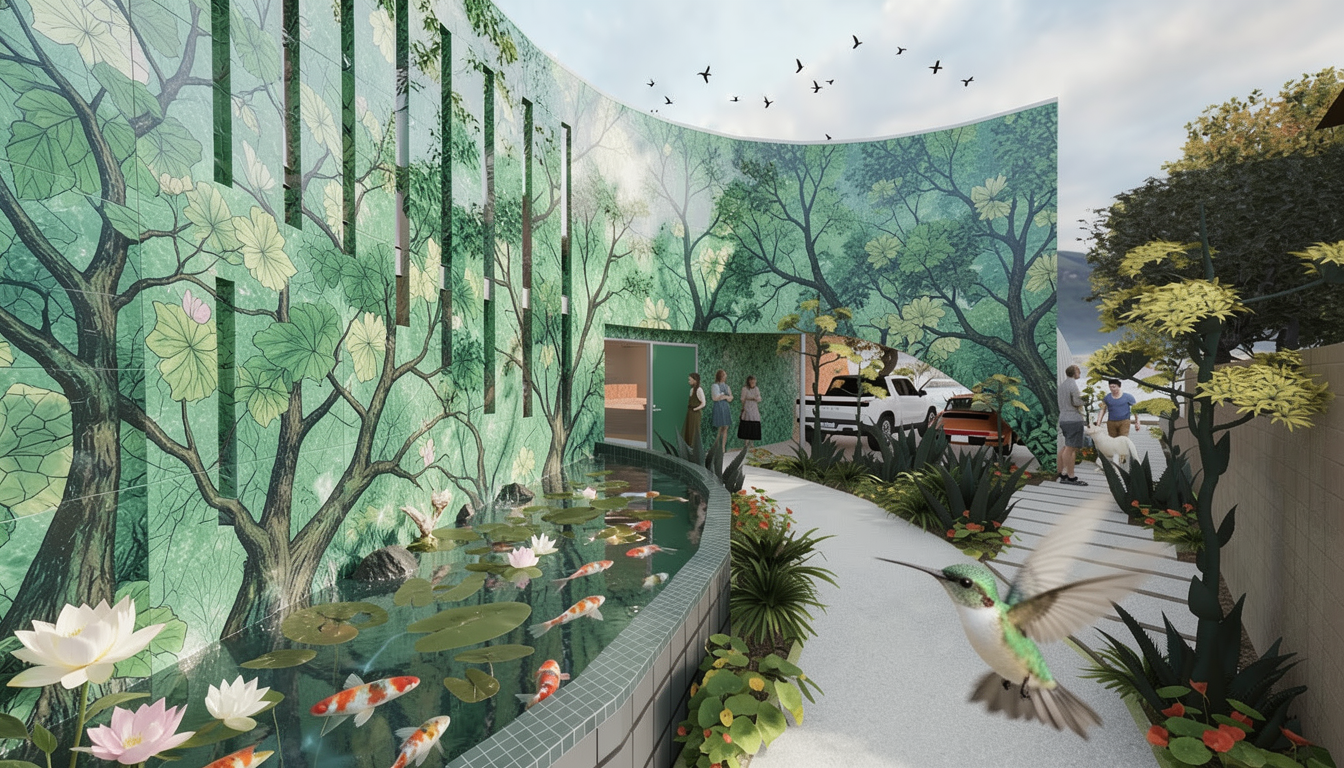
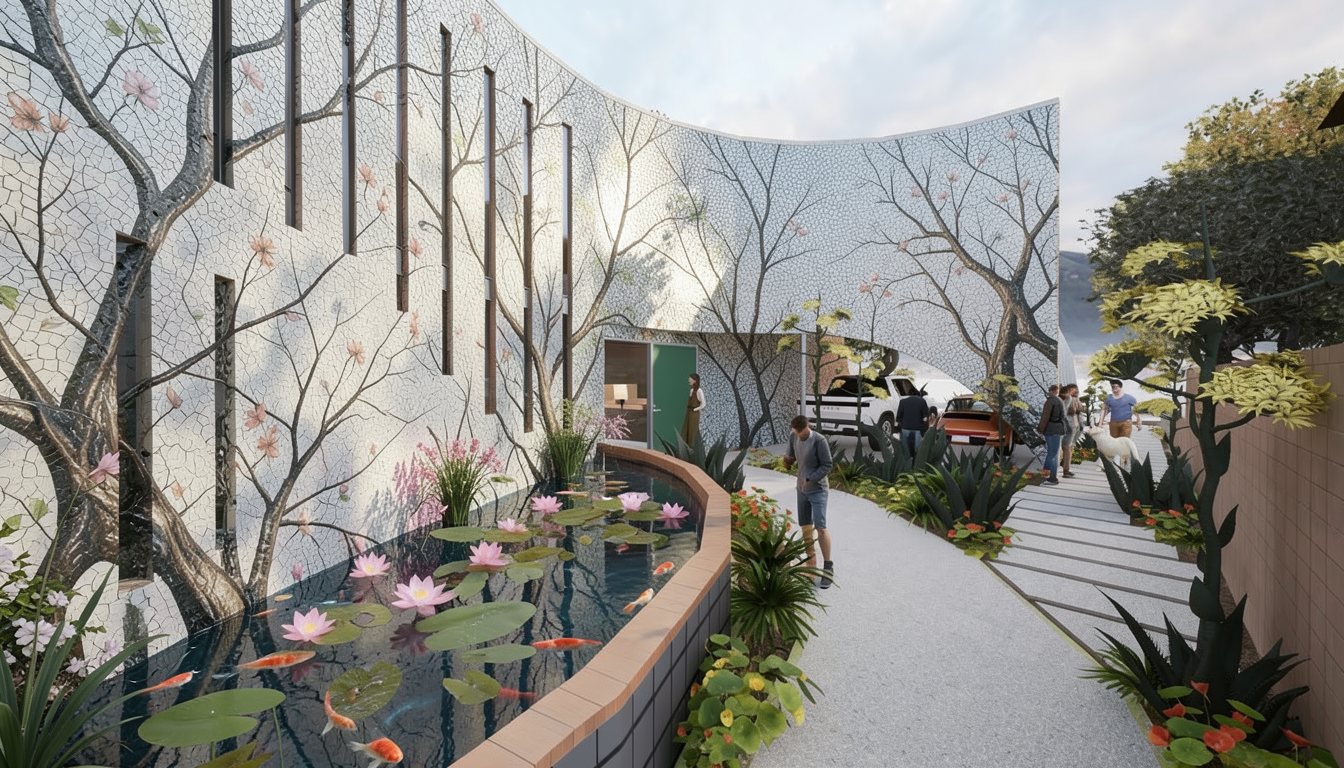
Q2 Rendering of the Main Entry Courtyard: Defined by the sweeping feature wall, water feature, and rain garden
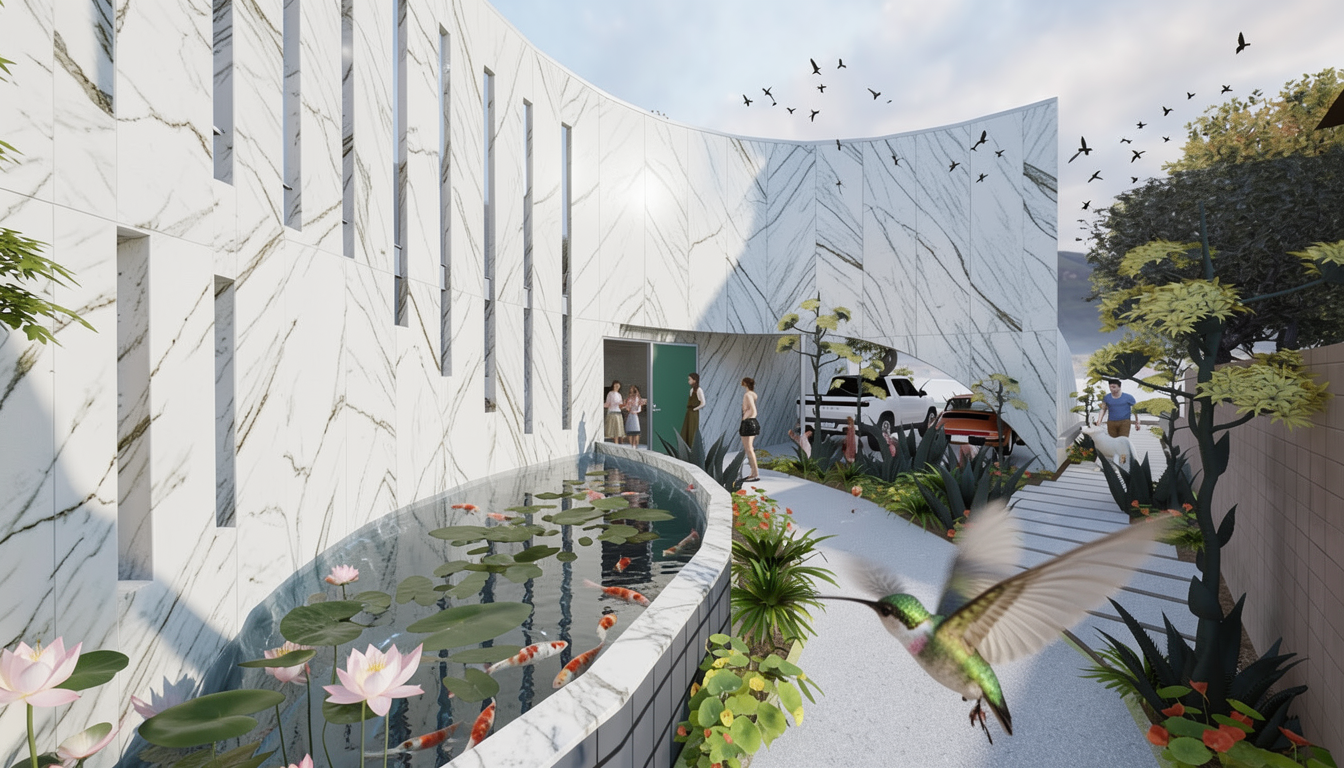
A curving feature wall intersects the arch along its southern edge, carving out a sequence of outdoor rooms—entry courtyard, carport, and garden—that extend the living space into the landscape. This move transforms what could be a purely utilitarian form into a dynamic spatial narrative, one that mediates between public and private, interior and exterior. The courtyard itself integrates a rain garden and water features, reinforcing the project’s ecological agenda while contributing to passive and active fire mitigation strategies. As illustrated below, the feature wall can be finished in a wide variety of fire resistant finish materials, such as stucco, stone, concrete, and even mosaic tile, offering a broad level of customization and individual expression for each home.
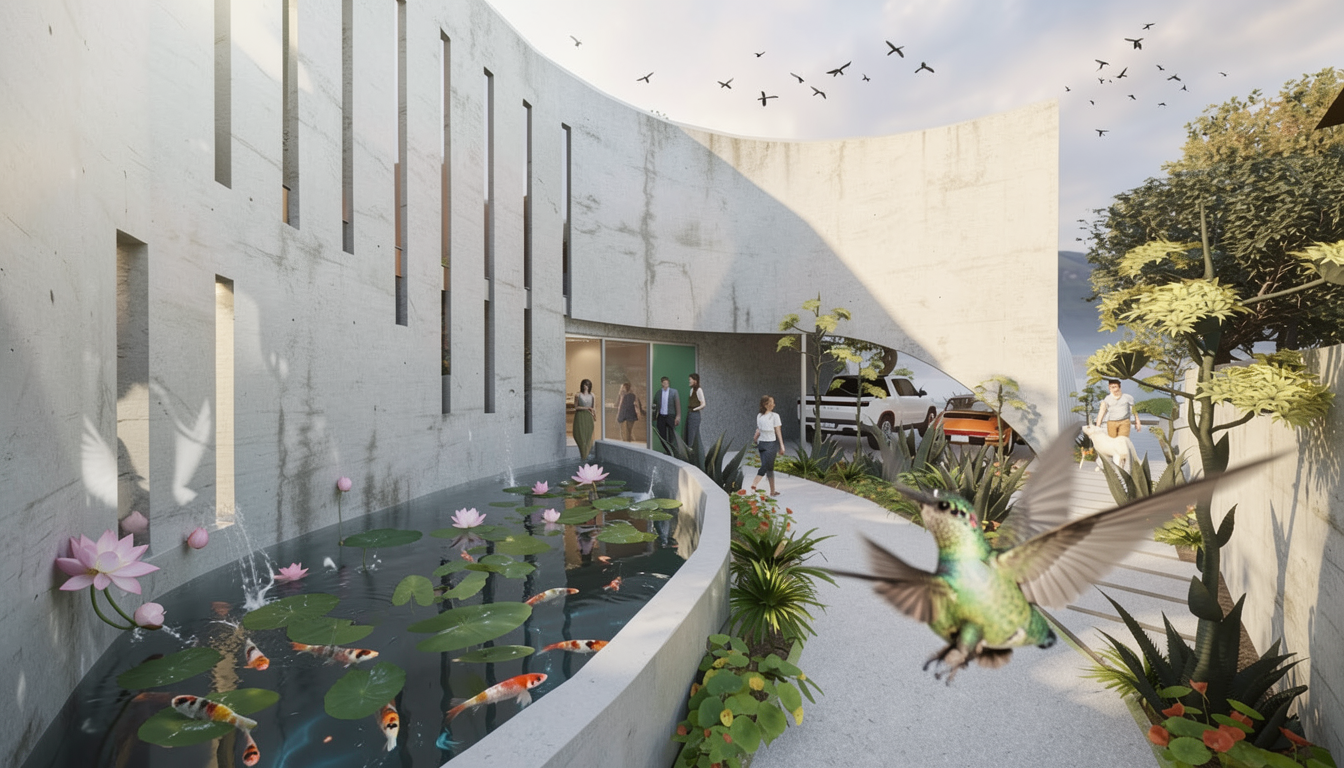
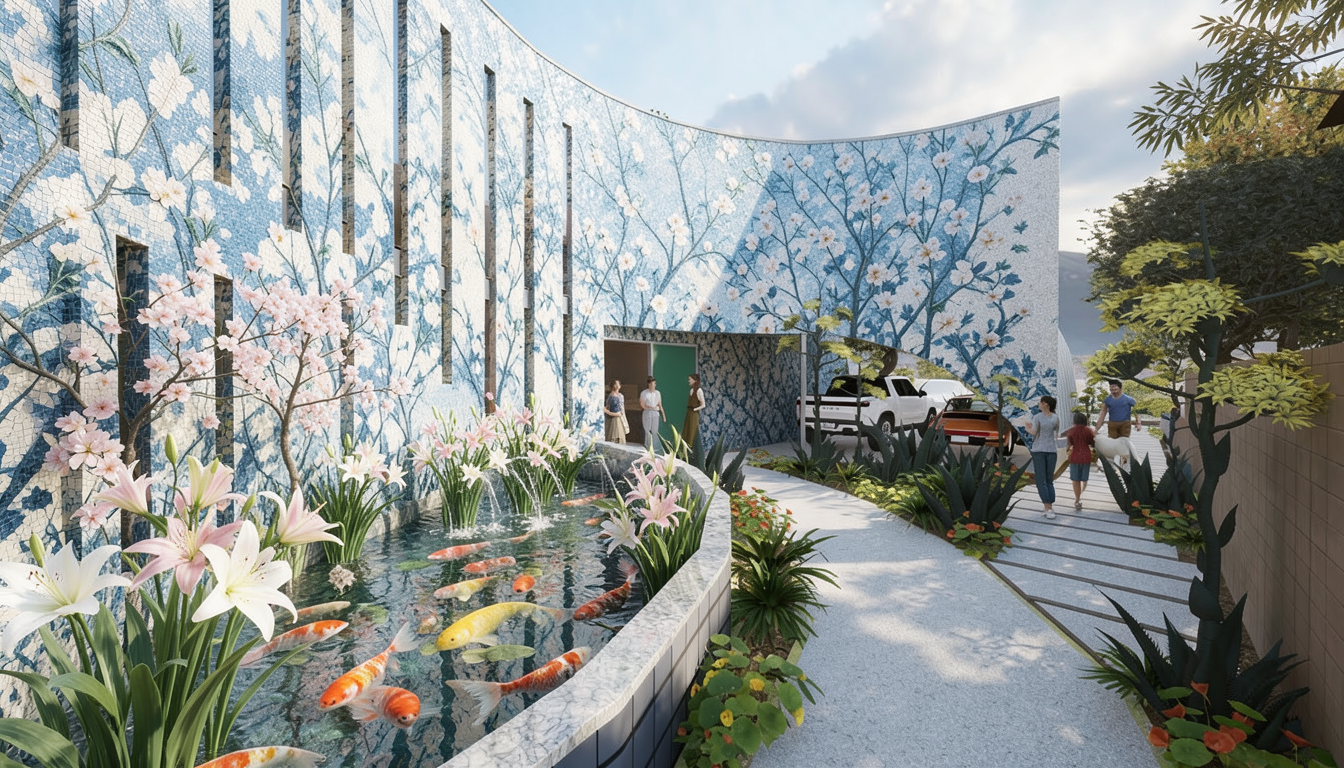
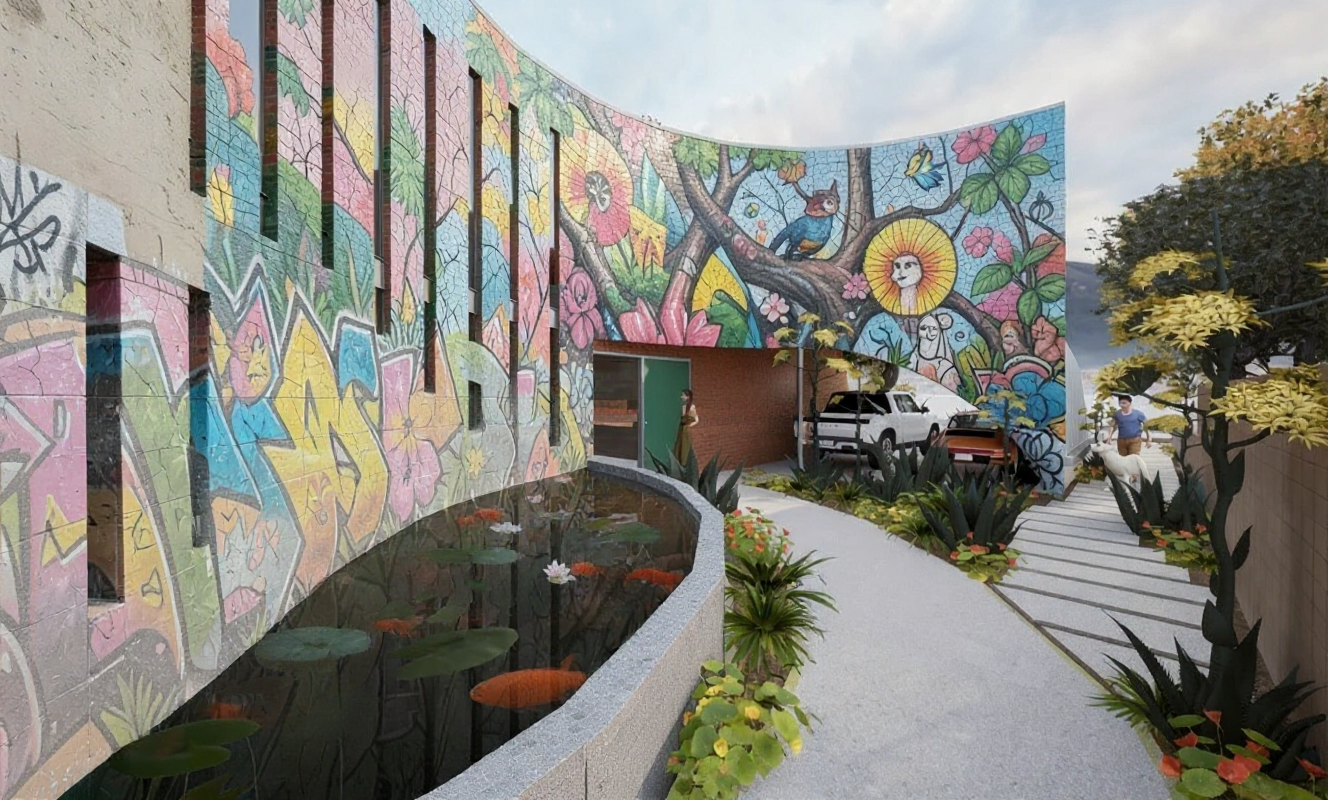
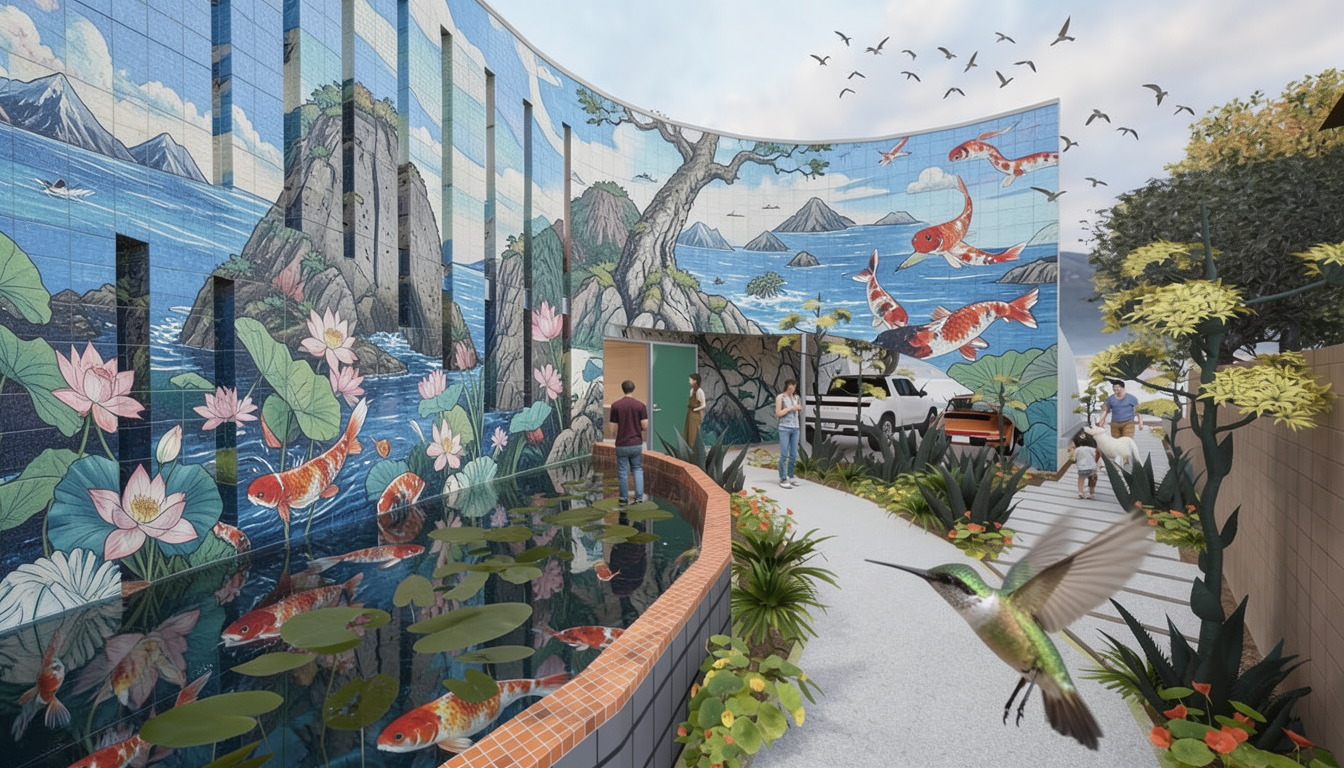
Fire resilience is central to the Q2 House. The use of non-combustible materials, a ventless construction methodology, and defensible landscape design positions the home as a forward-thinking response to the realities of wildfire-prone regions. The steel shell, combined with high-performance glazing and continuous insulation, creates a tightly controlled envelope that resists ember intrusion and minimizes heat transfer.
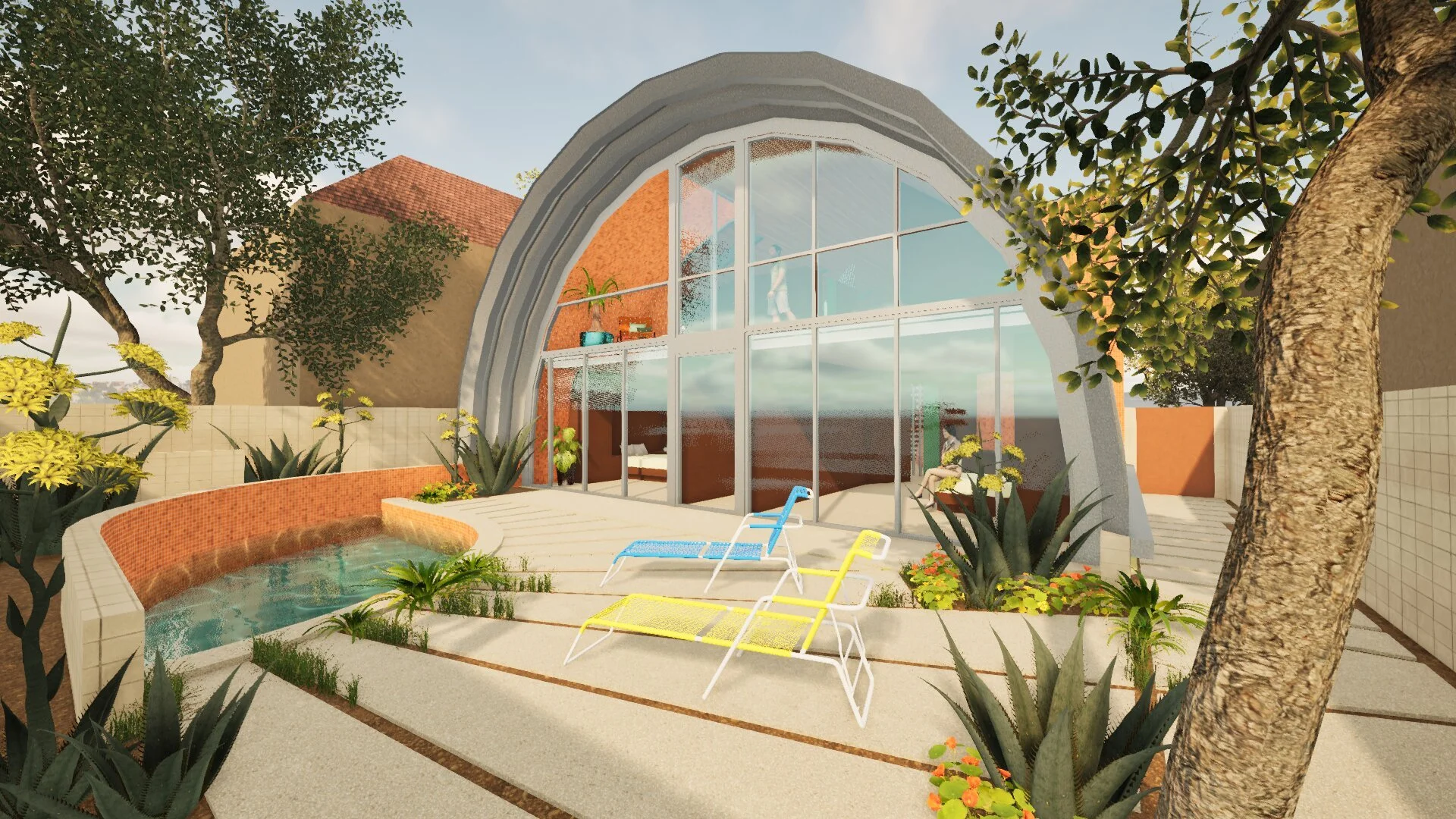
Q2 Rear Yard Rendering: Each bedroom looks out onto a drought and fire resilient landscape with a tiled plunge pool.
Equally critical is the project’s commitment to sustainability. Designed as a fully electrified home, the Q2 integrates rooftop solar with battery storage, enabling off-grid functionality and energy independence. Efficient systems planning—stacking mechanical, electrical, and plumbing zones—further reduces material use and construction complexity while enhancing long-term performance.
FLOOR PLANS
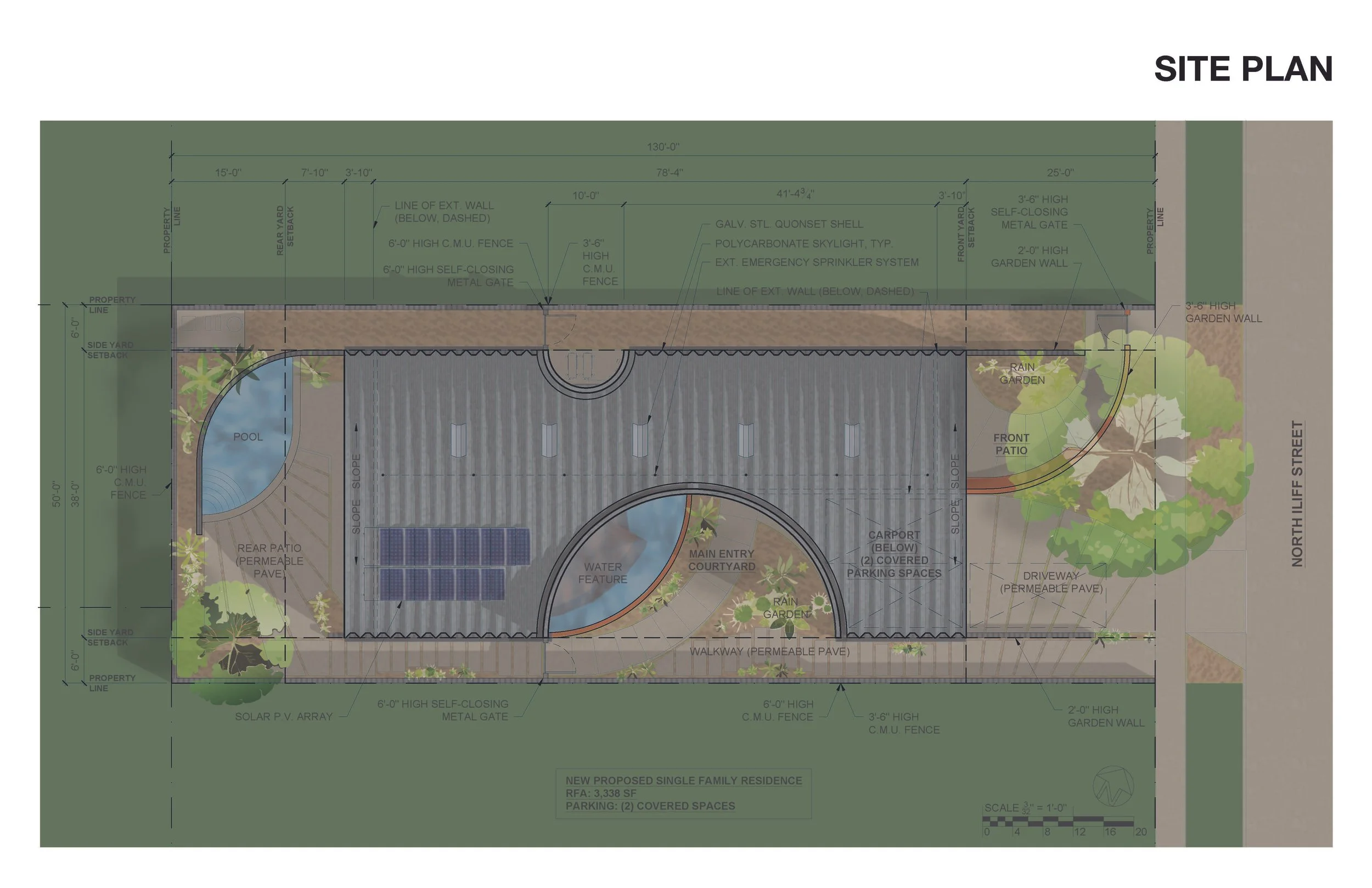
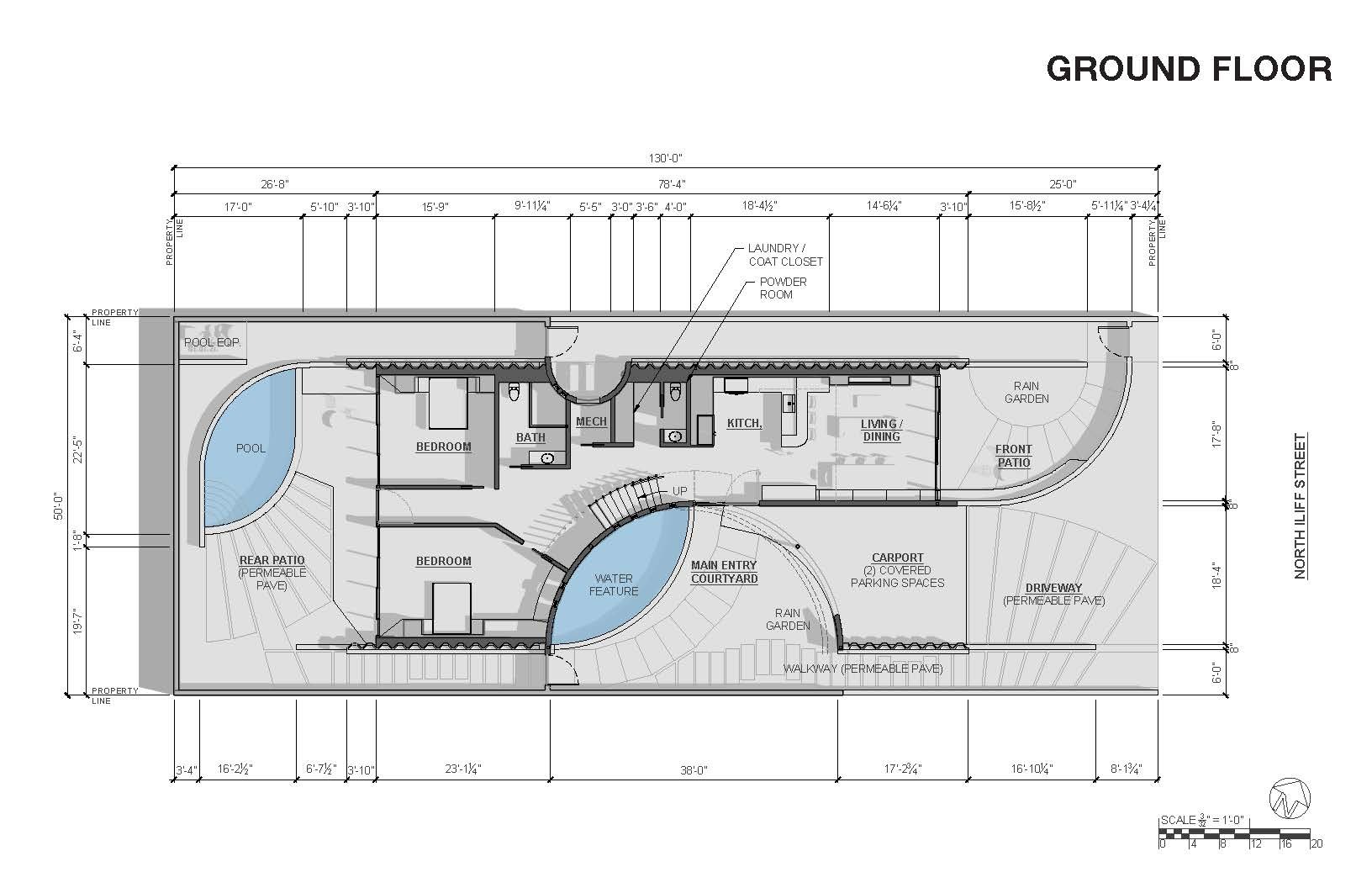
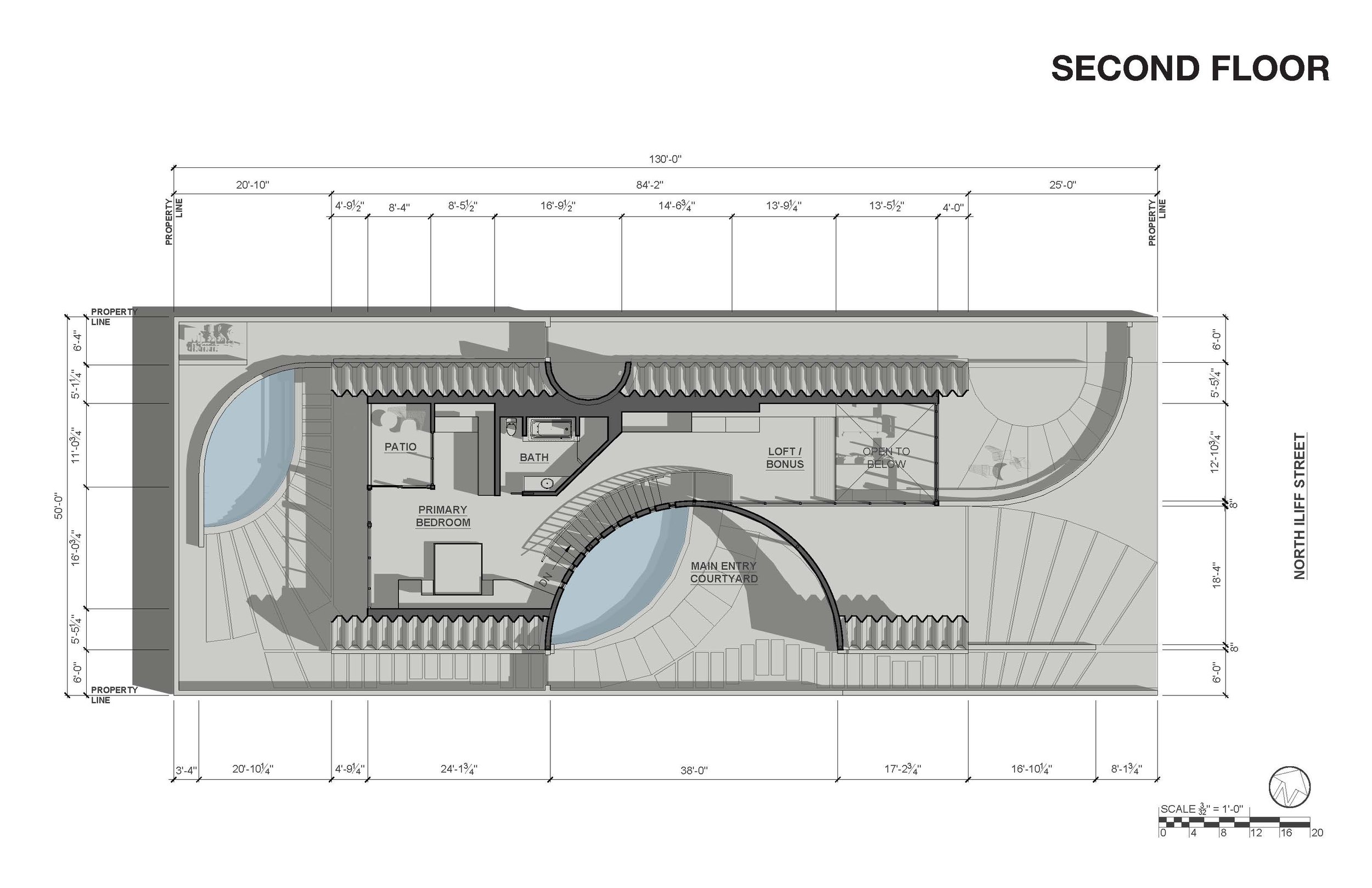
Inside, the architecture remains deliberately flexible. The clear-span structure allows for a range of interior configurations, accommodating evolving domestic needs without compromising the integrity of the form. A lofted primary suite overlooks the central living space, reinforcing vertical connectivity and spatial continuity.
CROSS SECTION
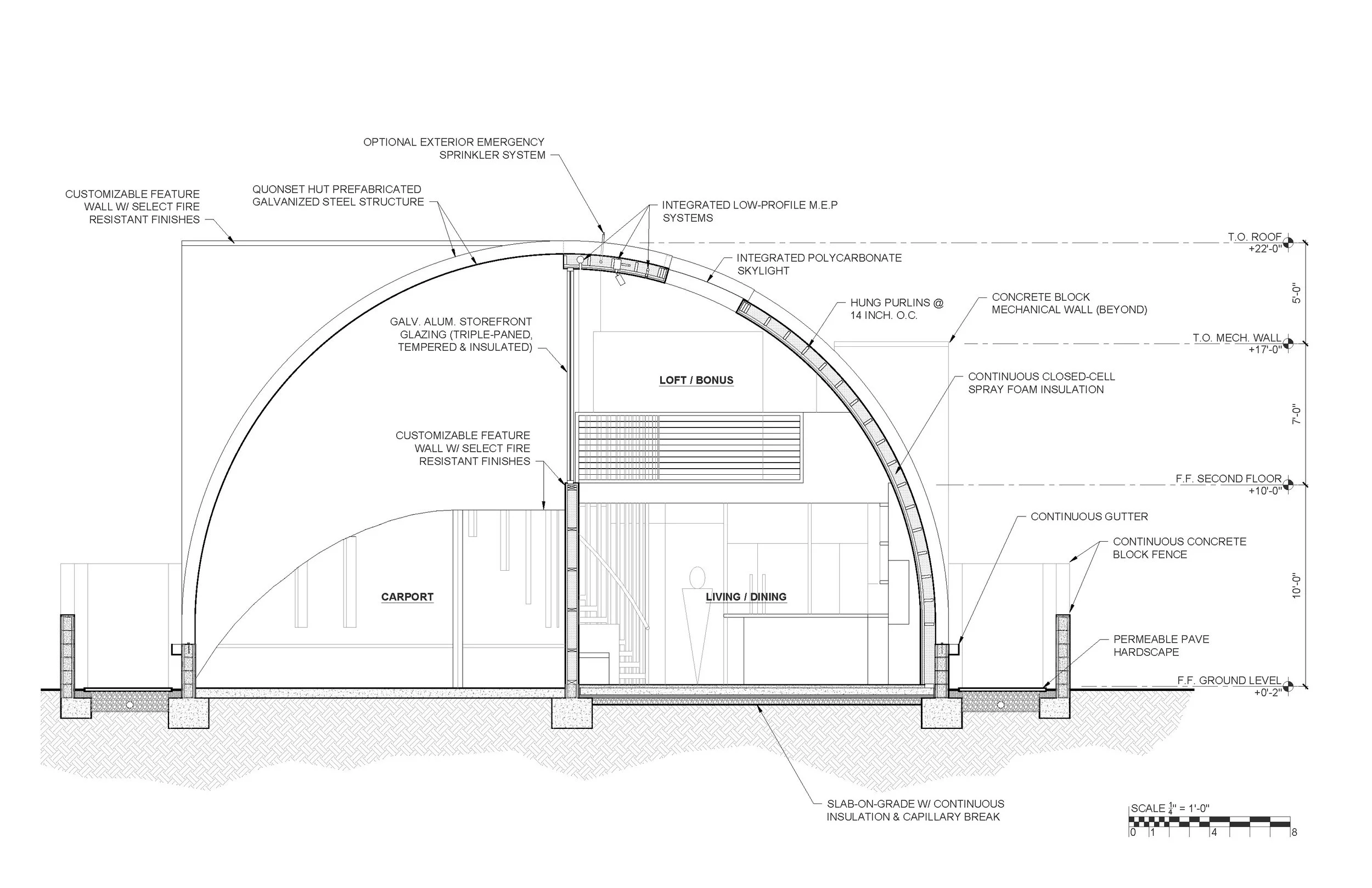
Q2 Cross Section Drawing: The overarching quonset system encloses the double-height living space and adjacent carport.
Ultimately, the Q2 House is not simply a design solution—it is a framework for thinking. By merging prefabrication, resilience, and timeless form, it proposes a new model for housing in Los Angeles: one that is efficient yet expressive, pragmatic yet poetic.