
The Hidden Cavern of Lautner’s Castle
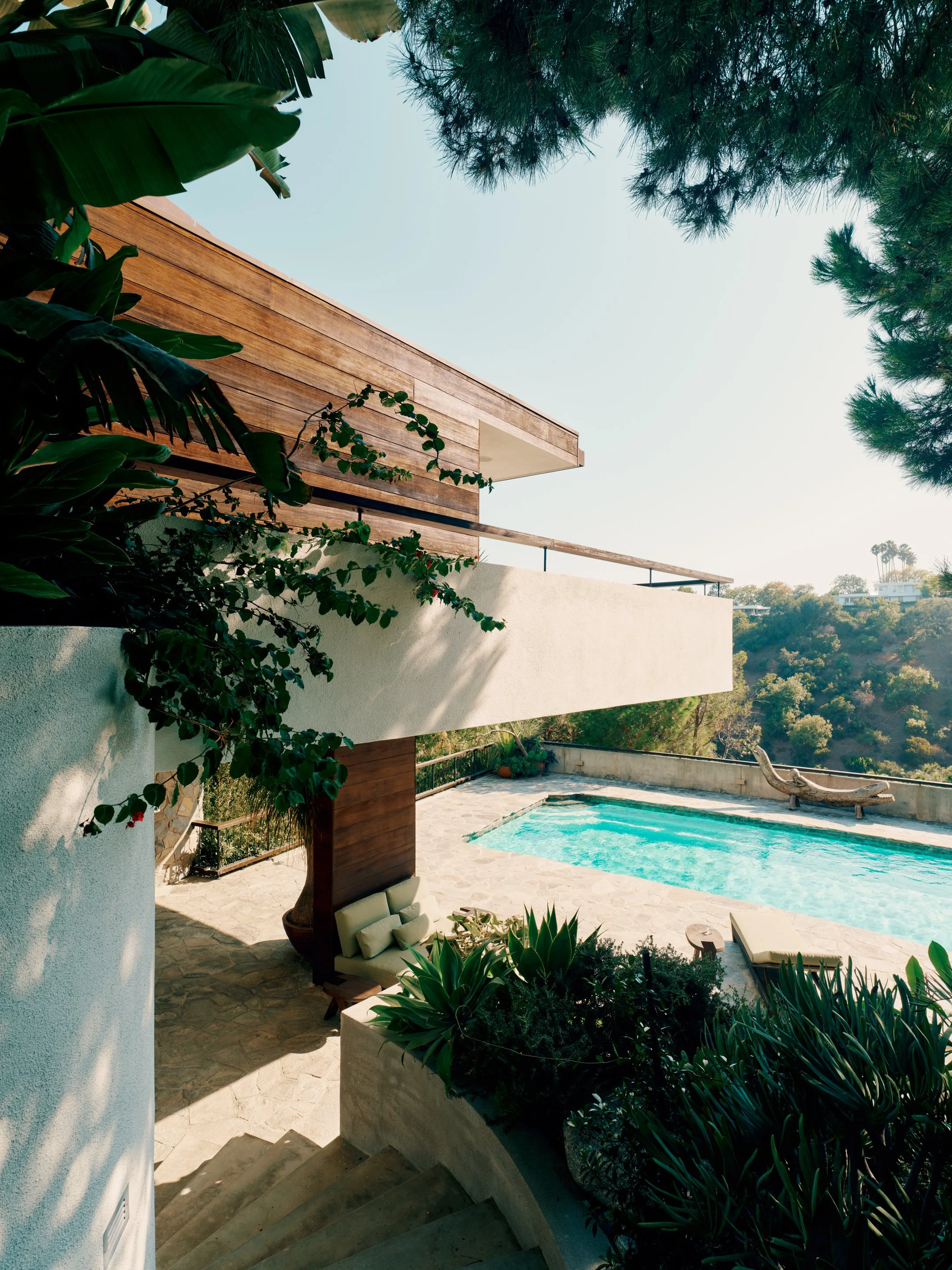
Exterior View from upper level going down stairs overlooking pool deck and view beyond. Photographer: Joe Fletcher
In the rugged hills of Los Angeles, Lautner’s Castle is a masterclass in organic architecture. It doesn’t just sit on the site; it belongs to it. Lautner adeptly bent the house to follow the natural curves of the canyon, stepping the levels down the slope to leave the land as undisturbed as possible.
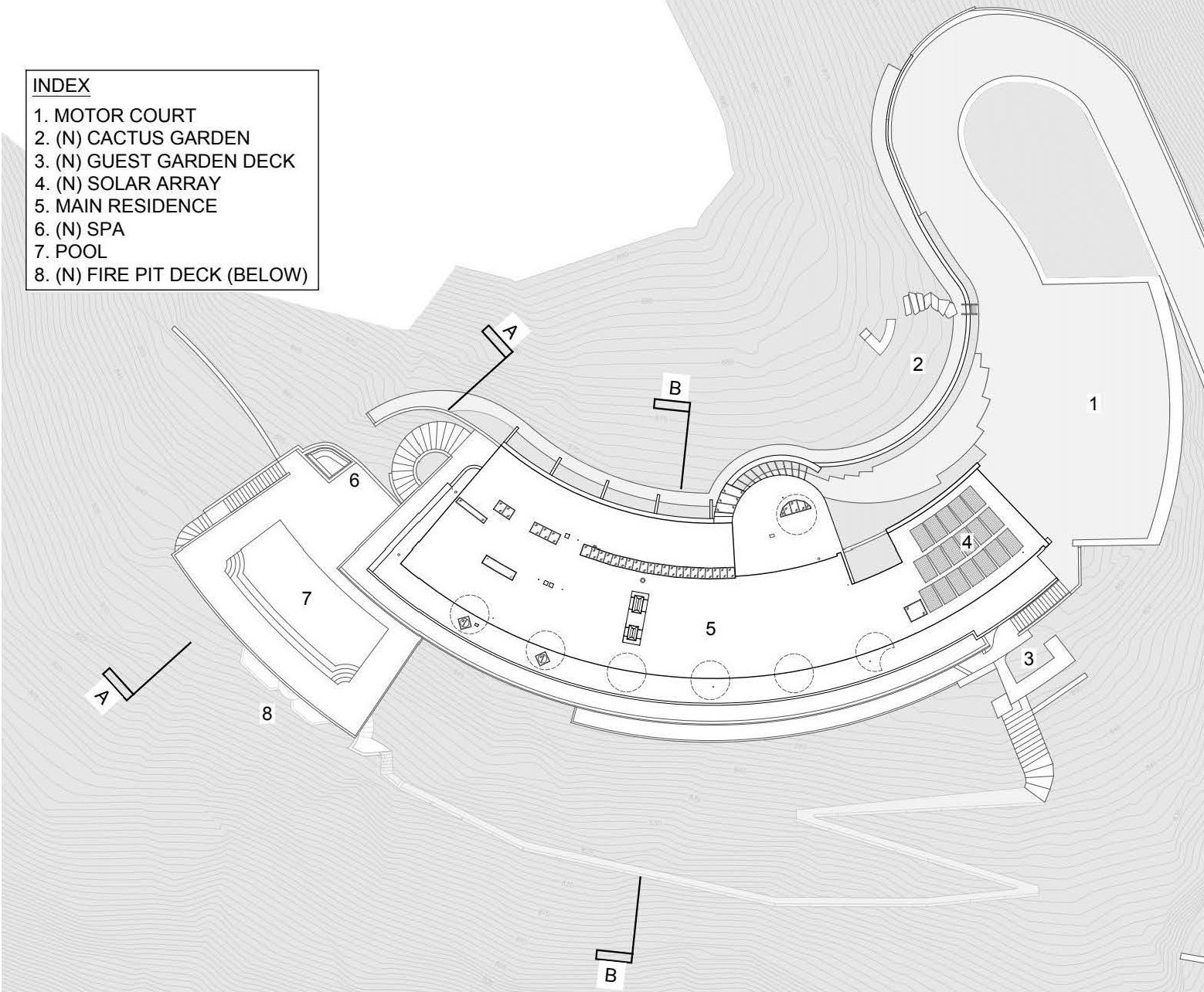
Site Plan: The home’s geometry follows the natural topographic contours.
On the western edge, Lautner made a move that was as structurally daring as it was bold: to create a pool deck without scarring the hillside with a massive retaining wall, he projected the pool out into the air.
By anchoring a stepped footing system deep into the bedrock, he created a soaring concrete cantilever. This preserved the hillside, but it also veiled a spatial secret: a dramatic void beneath the pool. For decades, this "undercroft" was just an overlooked structural necessity—a hidden space you could sense, but never truly experience.
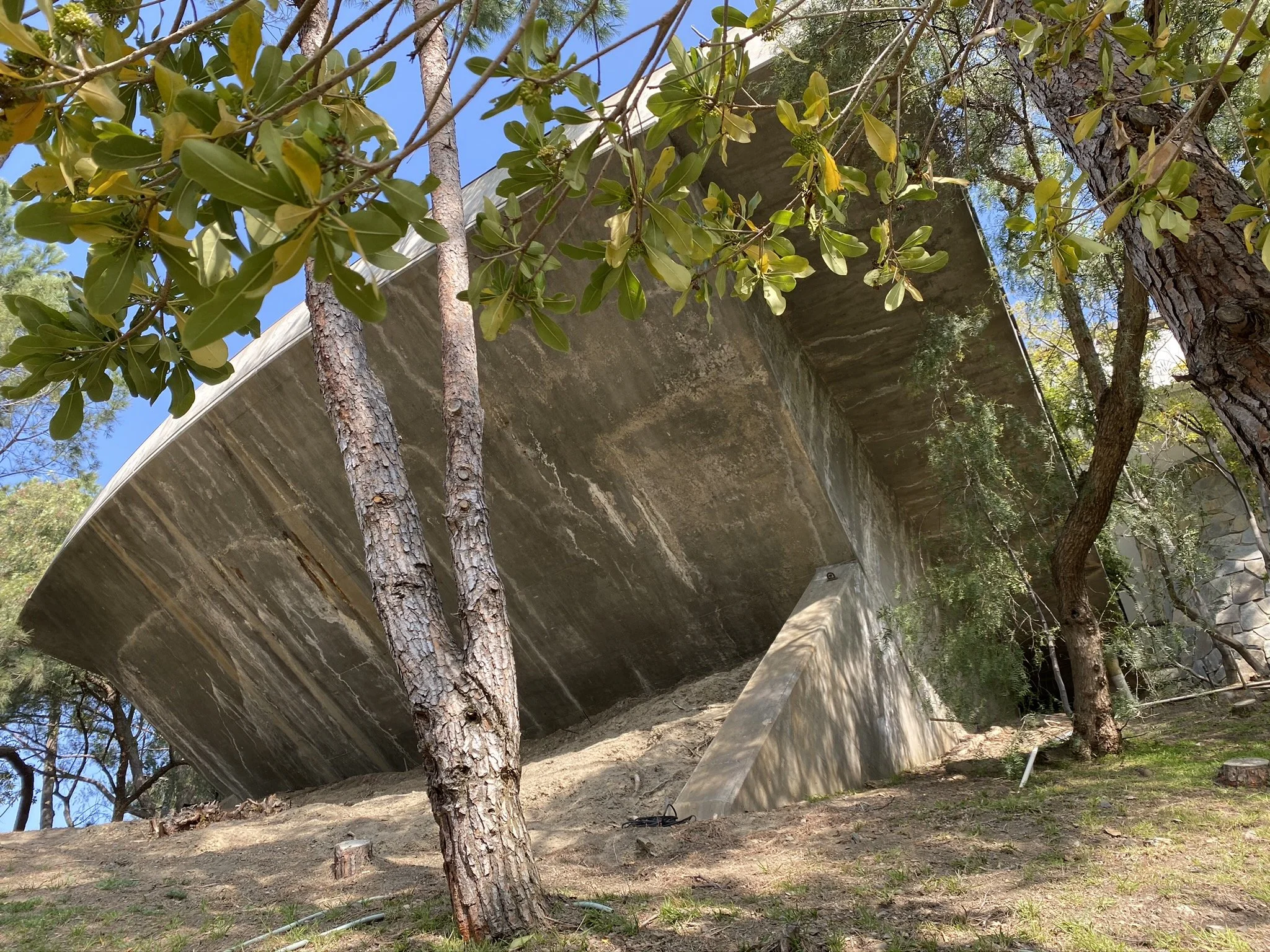
Before photo of the view from below looking up at the original concrete pool cantilever, showcasing the 'undercroft' before its transformation into the fire pit deck.
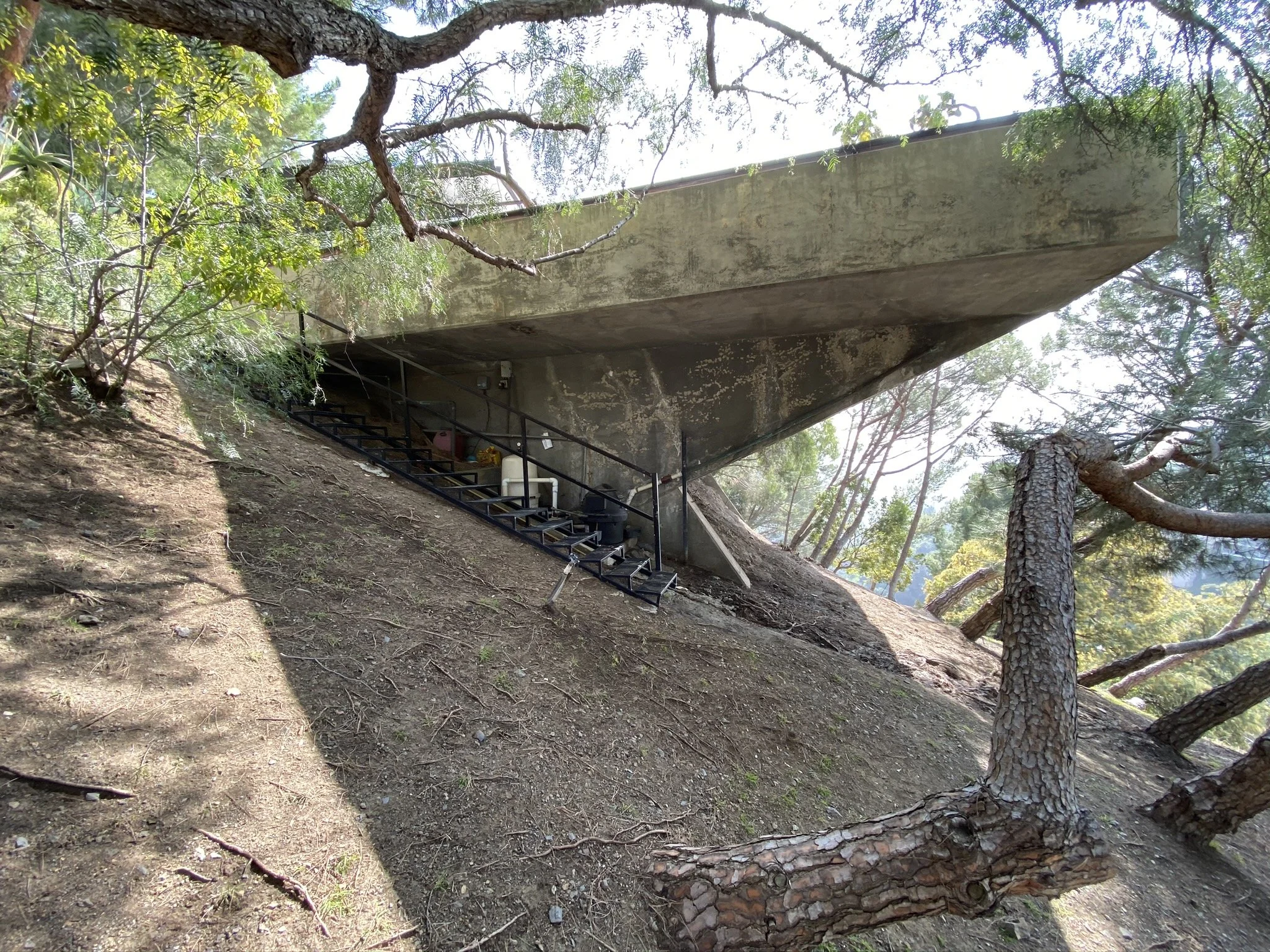
Before photo of the side profile of the massive concrete vessel. The exposed mechanical systems highlight the complexity of maintaining a "floating" pool on such a steep hillside.
When Conner + Perry Architects first arrived, standing beneath that massive concrete vessel felt like a discovery. The space begged to be occupied. We proposed a design that would finally grant access to this architectural moment, and the owners were immediately on board.
Melding seamlessly with the existing structure, we built an occupiable deck that connects directly to the landscape. To keep the cross-canyon views clear, we swapped traditional guardrails for cantilevered planters and built-in seating that feels completely open to the horizon. Custom lounge furniture and a cylindrical stone fire pit tie the design to the existing language of the house while introducing subtle new details.
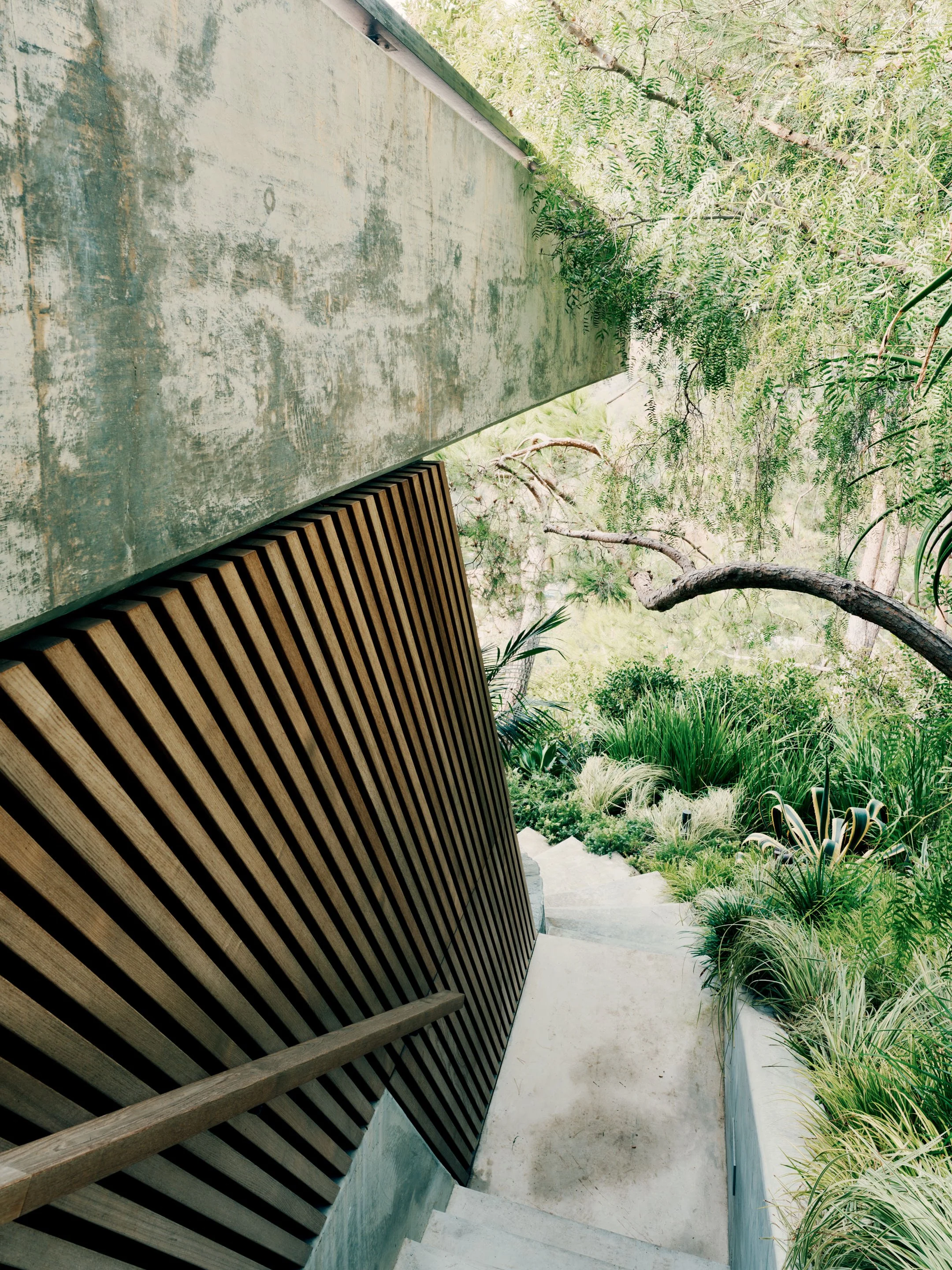
The new concrete stairs lead down to the 'cavern' level, featuring a vertical wood screen that elegantly conceals the pool’s mechanical systems. Photographer: Joe Fletcher
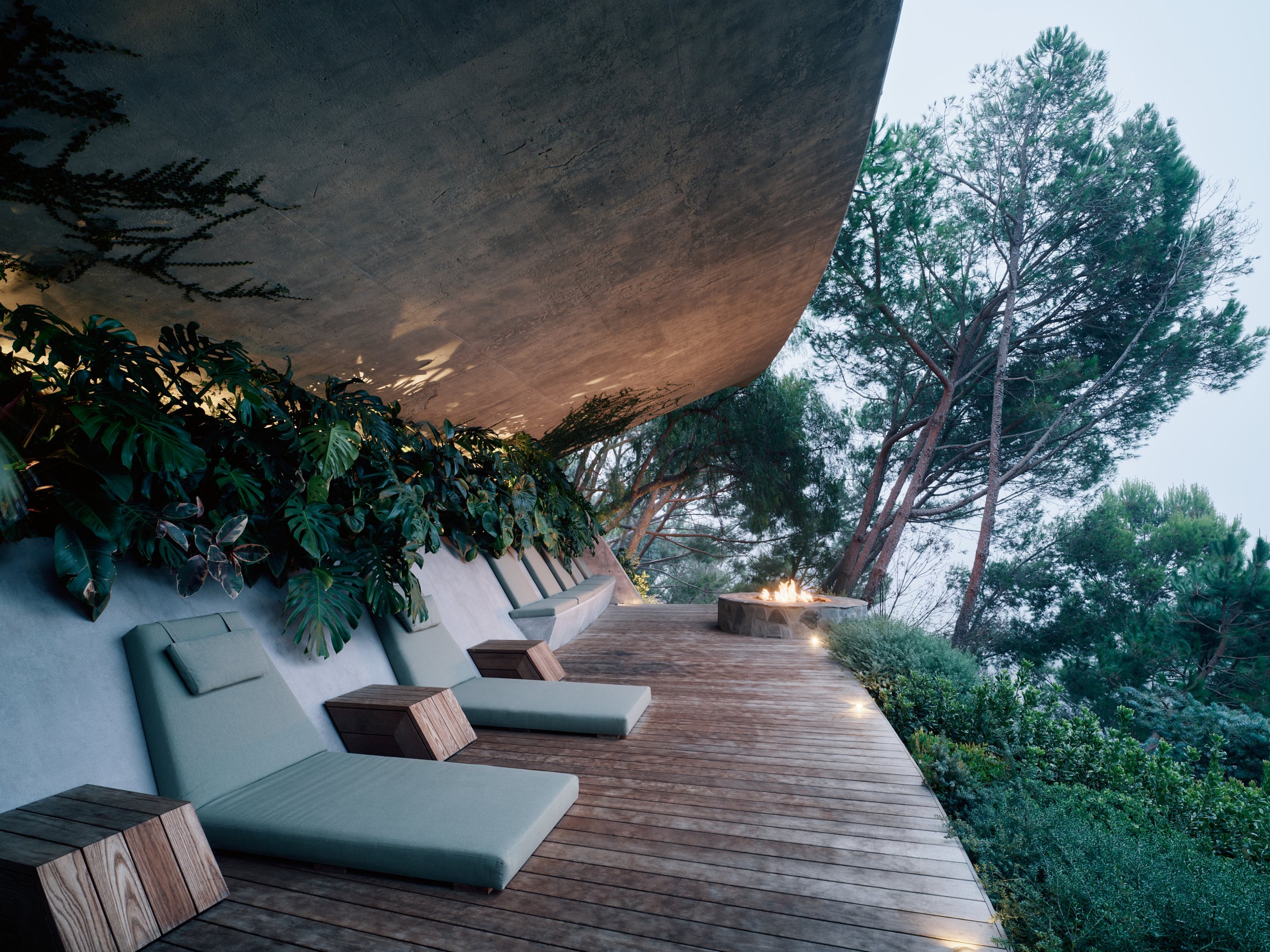
The Hidden Cavern at dusk: An architectural moment of discovery transformed into a warm, habitable space where the glow of the fire pit meets the original concrete vault. Photographer: Joe Fletcher
One of the highlights of the project was collaborating with Andrew Nasser, the original structural engineer for the pool. Returning to the structure he helped realize decades ago, Nasser worked with us to ensure the new deck remained harmonious with Lautner’s vision.
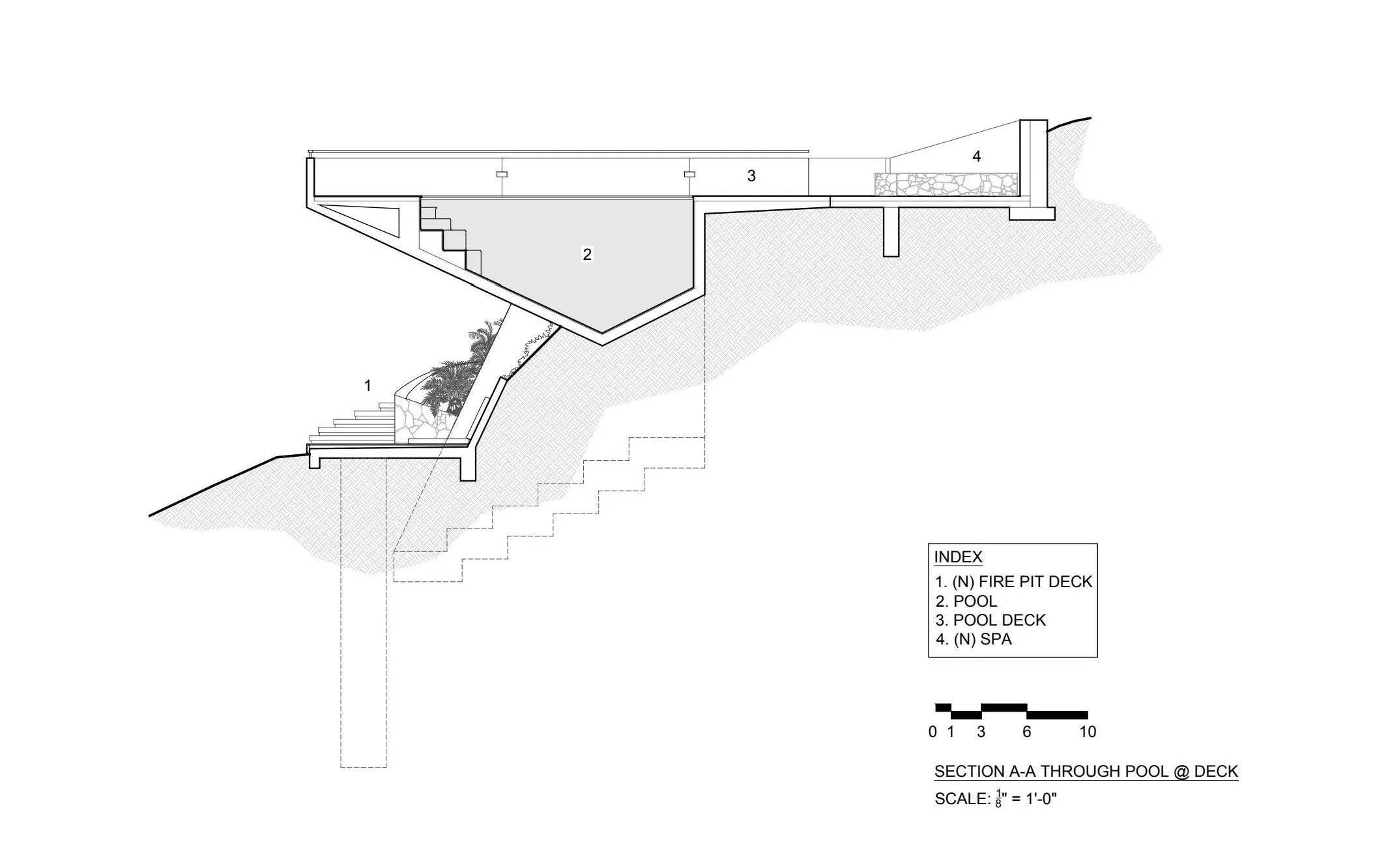
Section A-A: A technical look at the vertical stacking. By utilizing the 'undercroft' beneath the pool, we were able to create the new fire pit deck
The result is a space that finally lets you look up and appreciate the genius of the engineering. Lautner wasn't interested in the easiest path; he was a pioneer of structure as a means of conservation. By cantilevering the pool, he chose a complex structural feat over a destructive one, effectively saving the hillside from the scarring of traditional construction. Today, sitting beneath the weight of that pool, it doesn’t feel like a renovation—it feels like an architectural treasure finally brought into the light.
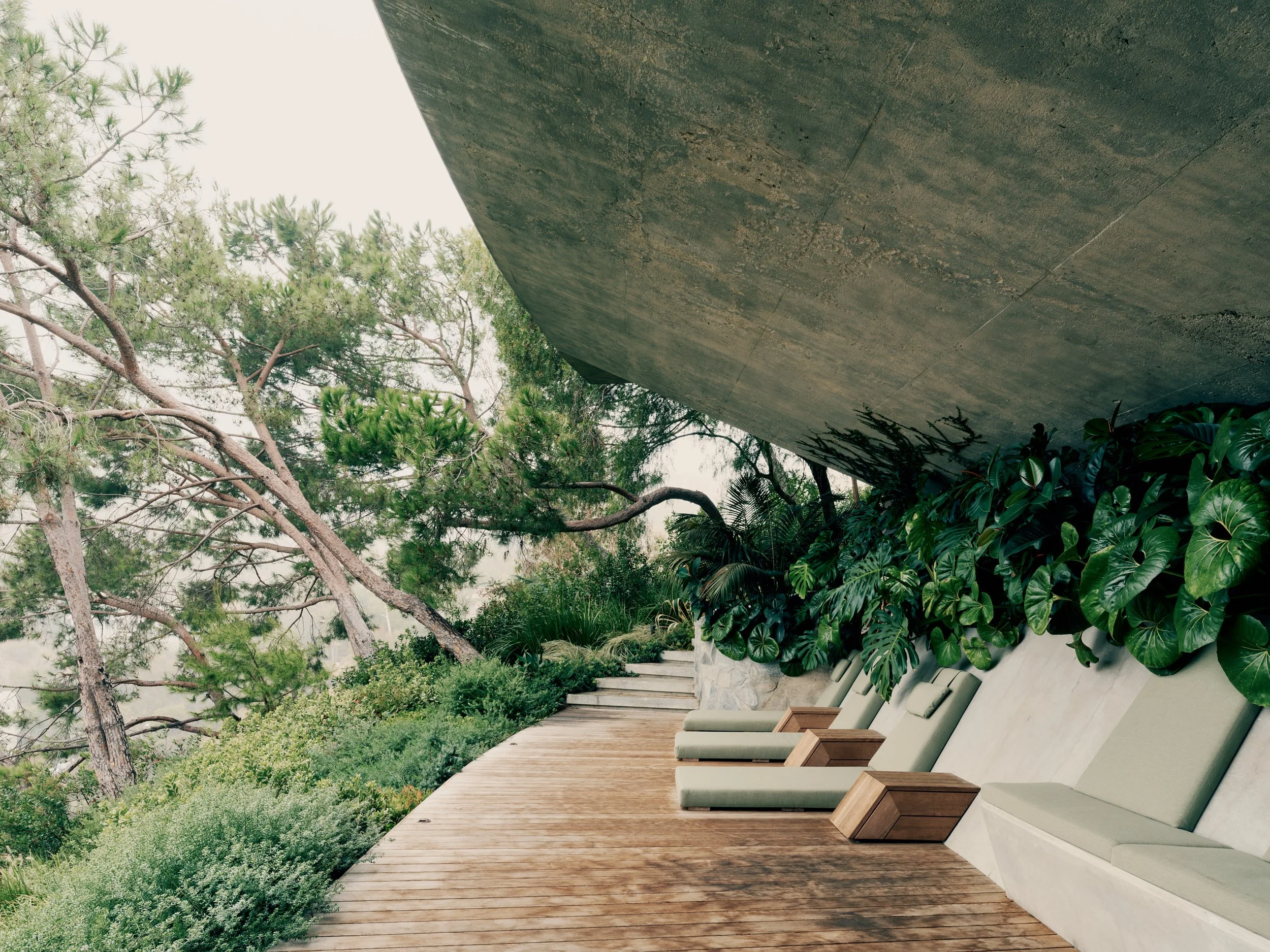
The transformation complete: A once-neglected structural void is now a serene outdoor lounge, where built-in seating and native plantings frame the expansive canyon views. Photographer: Joe Fletcher
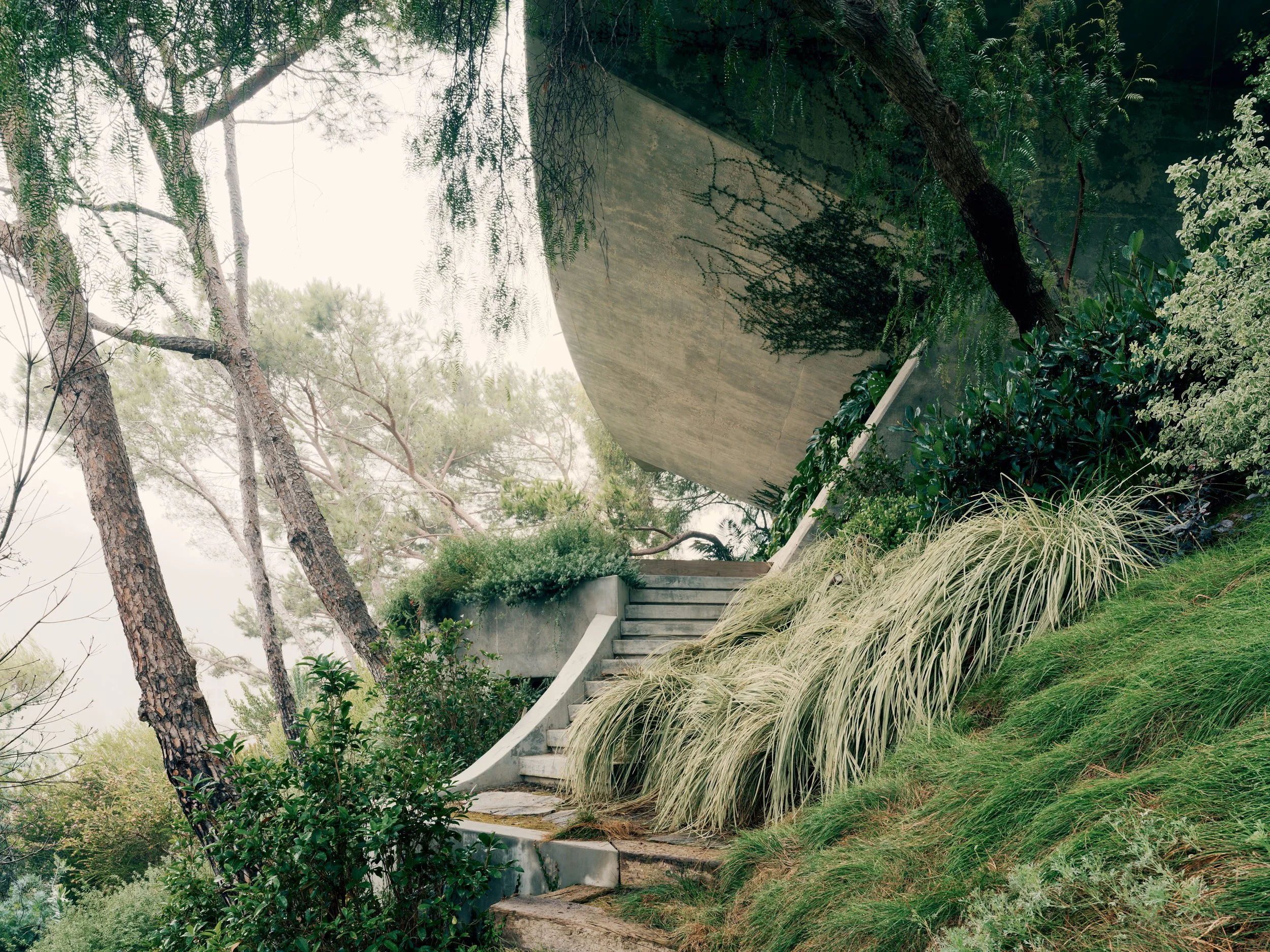
From the garden path, the project reveals itself as a journey of discovery. It’s more than a dialogue of materials; it’s about finally occupying the structural void—transforming a sensed architectural moment into a lived experience. Photographer: Joe Fletcher